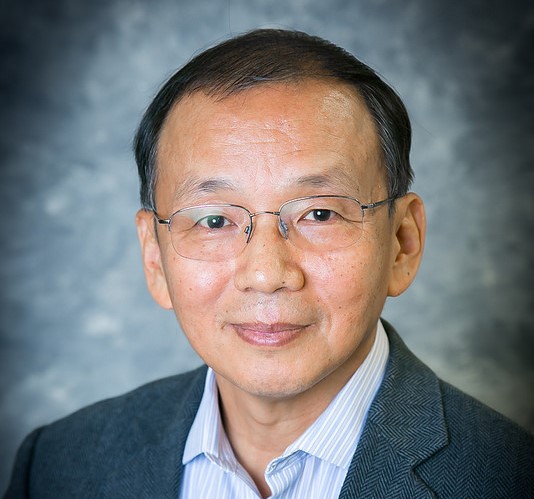
Prof. Zhiqiang Gao
Cleveland State University, United States
Biography
Prof. Zhiqiang Gao received his Ph.D. in Electrical Engineering from the University of Notre Dame in 1990 and has taught at Cleveland State University ever since. Faced with the widening gap between control theory and practice, Dr. Gao returned to the origins of control, spanning East and West across space and centuries in time, for insight and inspiration.
Through extensive collaboration with practitioners solving real-world problems, Dr. Gao, together with his students and collaborators, has aimed to rebuild the foundation of theory from first principles and restore its authenticity and unity in connection with practice.
For more than three decades, Dr. Gao has nurtured active disturbance rejection control (ADRC) from its early conceptual stage into a maturing and emerging industrial control technology, adopted by major players in industrial automation and often producing significant improvements in performance and energy saving.
By asking fundamental questions in research and teaching, Dr. Gao and his team seek creative solutions in practice and vitality in education. Their latest work shows the origin of integral control in the form of Mason Reset and the common principles connecting PID with ADRC seamlessly.
Abstract
Faced with the recent explosive progress of artificial intelligence, the field of control theory and practice—known for its rigor in the study of stability and optimality—has struggled to keep pace. The model-based framework, rooted in applied mathematics, is hardly scalable to the complexity of artificial neural networks and machine learning, even though they share origins in Norbert Wiener’s cybernetics.
Returning to engineering cybernetics and H. S. Tsien’s idea that a good controller cannot depend solely on a priori knowledge of the plant, the talk revisits the principle that a controller should always be “sensing and optimizing” in order to cope with unknown changes in plant dynamics and operating conditions.
One such example is the 1930 invention of Mason Reset, where error correction is performed on past control action in the form of automatic reset, yielding integral action and zero steady-state error without explicit numerical integration. The underlying reset principle appears to be universal, shared by PID, ADRC, adaptive control, and machine learning.
The talk discusses the mutual benefits that arise from cross-fertilization among these distinct fields, organized around the foundational principle of iteration.